


OpenStep™ Restorative Conversation Training
A restorative justice communication framework for listening, empathy, impact processing, conflict resolution, and needs-based next steps.
CircleUp’s OpenStep™ Restorative Conversation Training Is A Next-Level Conflict Processing & Resolution Tool
OpenStep™ - Restorative Conversations is CircleUp’s restorative justice communication framework for helping people feel heard, process what happened, understand impact, identify needs, and move toward meaningful next steps.
This training goes beyond simply asking four or five restorative questions. Participants learn how to create the conditions that make a conversation restorative: preparing themselves before the conversation, listening without rushing to fix, paraphrasing for content and feeling, asking questions with care, reducing bias, supporting emotional processing, and guiding people toward needs-based next steps.
Developed through more than 12 years of restorative justice practice, training, and reflection, CircleUp’s Restorative Conversations™ process is used by educators, public agencies, universities, nonprofits, workplace teams, healthcare and human services professionals, and community leaders who want a practical way to reduce tension, support repair, and navigate challenging moments with dignity and care.
CircleUp’s OpenStep™ Restorative Conversations Training Key Benefits
✔Move beyond scripted restorative questions into a deeper process for impact, needs, repair, and next steps
Strengthen listening, empathy, and validation skills
✔ Help people feel heard without immediately giving advice or trying to “fix” the situation
✔ Reduce tension and prevent low-to-moderate conflict from escalating
✔ Support more respectful conversations with coworkers, clients, families, and community members
✔ Give staff a repeatable process for guiding conversations from emotion to clarity and next steps

Buy Restorative Conversation Cards

Shop Restorative Conversation Cards

Shop BULK Restorative Conversation Cards
What Makes a Conversation Restorative?
A restorative conversation is not just a calm conversation, a difficult conversation, or a list of open-ended questions. A conversation becomes restorative when it is grounded in restorative justice values: dignity, respect, accountability, voice, relationship, repair, and shared humanity.
In CircleUp’s process, the facilitator’s role is to create a container where people can process what happened, name the impact, explore feelings and needs, and identify next steps that support repair or restoration. This requires more than asking the “right” question. It requires preparation, self-awareness, active listening, paraphrasing, emotional validation, curiosity, and the ability to guide the person without taking over their solution.
Quick Facts About Restorative Conversations™
-
This course is available in:
Live Online Format - We facilitate the course on Zoom.
Live Onsite Format - We come to your office or training space, bring everything needed for a memorable experience, and facilitate the session
Self-Paced Asynchronous on our LMS
-
Live Onsite | Live Online - 3-4 Hours
Self-Paced eLearning — approximately 6 hours
A 2-hour version is available too
-
Staff and frontline professionals
Supervisors and managers
HR, training, and people operations teams
Direct service providers
Educators and school staff
Healthcare, human services, and care professionals
Public agency and nonprofit teams
Anyone who supports others through difficult emotions, challenging conversations, or workplace tension
-
Recommended Group Sizes
30-40 per Training
We offer live onsite and live online trainings for small teams, full departments, and large organizations.
We offer large group trainings onsite and online from 100+ people
-
DSS CEU Certificate of Completion for self-paced course
What Restorative Conversations Teaches
Restorative Conversations™ teaches participants how to support others through challenging moments using a structured communication process rooted in listening, empathy, validation, curiosity, and needs-based next steps.
Many workplace and community conflicts escalate because people feel unheard, misunderstood, dismissed, or rushed toward solutions before they have had a chance to process what happened. This training helps participants slow down, listen with intention, and guide conversations in a way that reduces defensiveness and builds trust.
Participants learn how to recognize when someone may need a restorative conversation, how to avoid common ineffective listening habits, and how to use communication tools such as active listening, paraphrasing, open-ended questions, and needs-based next steps.
Pillar 1: Preparing to Hold a Restorative Conversation
Participants learn how to slow down, check assumptions, reduce bias, and prepare themselves to listen without rushing to fix, correct, advise, or control the outcome.
Pillar 2: Restorative Communication Skills
Participants practice active listening, engaged body language, paraphrasing for content, paraphrasing for feeling, emotional validation, curiosity questions, and open-ended restorative questions.
Pillar 3: Restorative Questions and Impact Processing
Participants learn how to use restorative questions to help people process what happened, identify who was impacted, reflect on emotions and needs, and move toward repair.
Pillar 4: Needs-Based Next Steps
Participants learn CircleUp’s needs-based next steps process: summarizing key points, connecting needs to possible solutions, inviting reflection and feedback, assessing viability and risk, offering support, and summarizing the next step.
Affective or Effective Statements, Restorative Chats, and Restorative Conversations: What’s the Difference?
In restorative practices, people often use terms like effective statements, restorative chats, and restorative conversations as if they mean the same thing. At CircleUp, we define them as related but different levels of restorative communication.
What Is an Effective Statement?
An effective statement, often called an affective statement in the restorative justice field, is a brief restorative communication tool used to name impact, express a feeling or concern, and make a respectful request.
An effective statement might sound like:
“When I hear people talking while someone else is sharing, I feel concerned because it can make it harder for people to feel respected and heard. What I need is for us to pause and give one person our attention at a time.”
Effective statements are useful because they help people communicate impact without blaming, shaming, threatening, or escalating the situation. They are often the first step in restorative communication because they help people name what happened, how it affected them, and what they need moving forward.
At CircleUp, we see effective statements as a powerful entry point, but not the same thing as a full restorative conversation. An effective statement may open the door to reflection, but it does not always create enough space for someone to process what happened, explore impact, identify needs, and move toward repair.
What Is a Restorative Chat?
A restorative chat is a brief, informal conversation that uses restorative language or restorative questions to help someone reflect on a situation. It may include questions like:
“What happened?”
“What were you thinking or feeling at the time?”
“Who was impacted?”
“What do you think needs to happen next?”
Restorative chats can be helpful in everyday moments, especially when the goal is to quickly interrupt harm, support reflection, or help someone reconnect to expectations and community values.
However, many restorative chats are short and question-based. In practice, they often become a quick exchange where someone asks a few restorative questions, receives a response, and then ends the conversation. While this may be better than punishment, blame, or avoidance, it does not always provide enough structure for emotional processing, impact processing, bias awareness, or meaningful next steps.
What Is a Restorative Conversation?
A restorative conversation, as CircleUp defines it, is a deeper communication process rooted in restorative justice values. It is not simply a script, a checklist, or a set of open-ended questions.
A CircleUp restorative conversation includes how the facilitator prepares, how they listen, how they ask questions, how they paraphrase, how they notice their own bias, how they support the person’s emotional processing, and how they guide the conversation toward needs-based next steps.
In CircleUp’s process, the facilitator is not there to give advice, push an agenda, decide the outcome, or rush someone toward a solution. The facilitator’s role is to hold a restorative container where the person can feel heard, process what happened, understand impact, identify feelings and needs, and explore what support, repair, agreement, or next step may be needed.
How CircleUp’s Definition Is Different
Many people interpret a restorative conversation as a short conversation where someone asks four or five restorative questions and then moves on. That approach can be useful, but it can also become mechanical. When restorative conversations are reduced to a checklist, people may answer the questions without feeling truly heard, understood, or supported.
CircleUp’s Restorative Conversations™ process goes further. We teach participants how to stay grounded in the self-process before and during the conversation, check assumptions and bias, use active listening, paraphrase for content and feeling, ask open-ended questions with care, support emotional processing, and guide people toward needs-based next steps.
This is the difference between asking restorative questions and actually holding a restorative conversation.
A CircleUp restorative conversation asks:
Who am I being as I enter this conversation?
What assumptions, emotions, or biases do I need to notice before I respond?
How do I listen in a way that helps this person feel heard and understood?
How do I paraphrase what they are saying and feeling without taking over?
How do I help them process impact?
How do I guide them toward what they need without giving advice or imposing my own solution?
What next step would support repair, restoration, accountability, or dignity?
This is why CircleUp teaches Restorative Conversations™ as a full restorative justice communication framework, not just a set of questions.

Learning Outcomes
Identify common situations and emotional triggers that signal the need for a restorative conversation.
Explain the purpose and key components of a restorative conversation, including validation, empathy, curiosity, and needs-based support.
Demonstrate active listening skills, including engaged body language, paraphrasing for content, paraphrasing for emotion, and asking open-ended questions.
Apply restorative open-ended questions to help others process emotions, gain clarity, and feel heard.
Guide a restorative conversation from start to finish using communication skills, restorative questions, and needs-based next steps.
Support more respectful and effective interactions with coworkers, clients, families, teams, and community members.
Identify how bias, assumptions, urgency, or the desire to “fix” can interfere with a restorative conversation.
Use needs-based next steps to help people move from emotional processing toward practical repair, agreement, support, or follow-up.
Tools Participants Learn
Participants leave with practical tools including:
Restorative Conversation Framework
Intentional Communication Skills
Paraphrasing for Content Practice Tool
Paraphrasing for Feeling Practice Tool
Open-Ended Question Prompts
Restorative Question Bank
Needs-Based Next Steps Guide
Full Conversation Practice Scenario
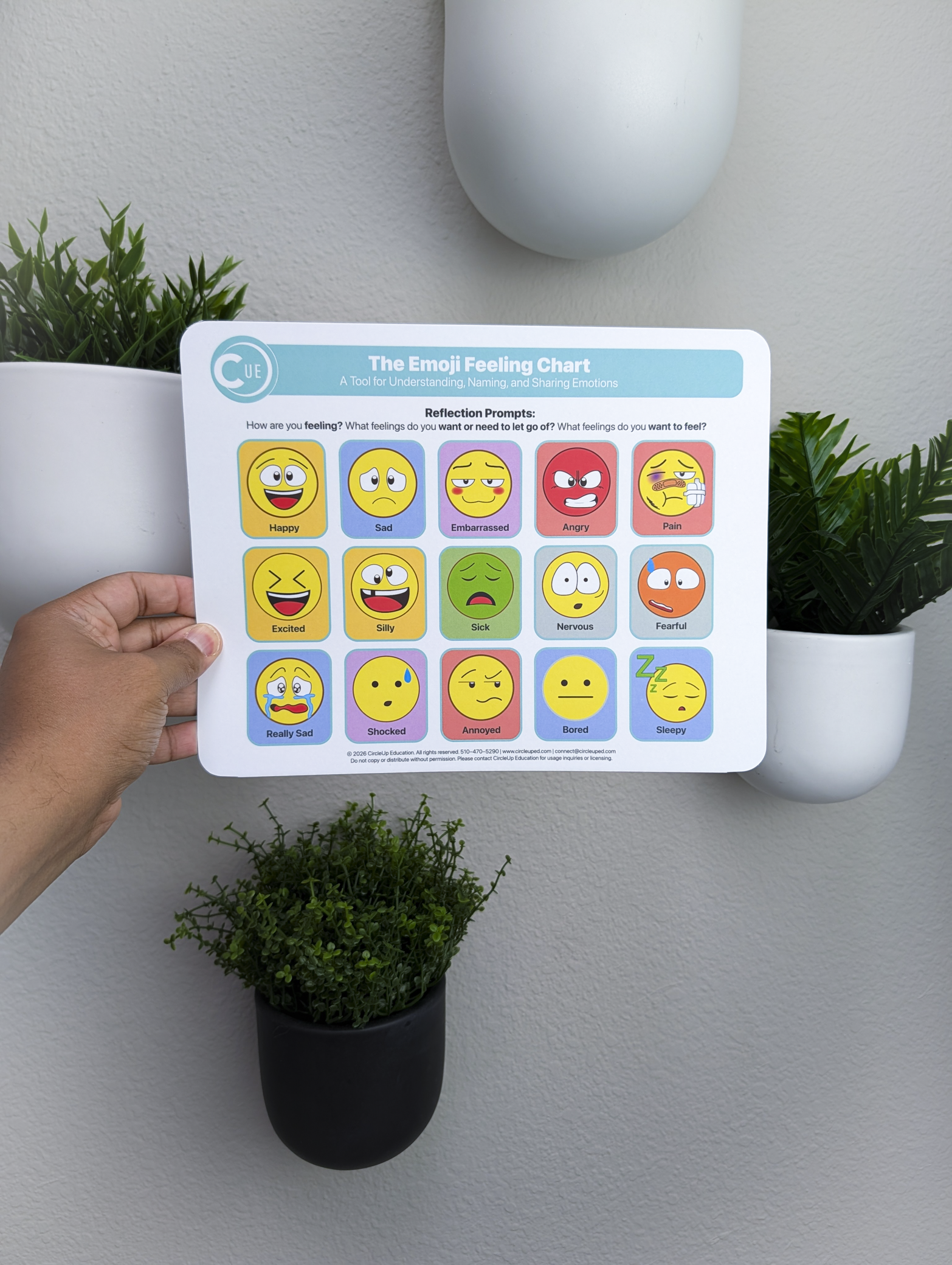
CircleUp Feeling Wheel or emotion-processing tool
Restorative Conversation Card practice guide

Why Restorative Questions & Affective Statements Are Not Enough
Many restorative justice resources teach a short list of restorative questions. Those questions can be useful, but they do not automatically make a conversation restorative.
In real conversations, people may feel defensive, overwhelmed, misunderstood, ashamed, angry, hurt, or unsure of what they need. A facilitator needs more than a checklist. They need the skills to listen deeply, paraphrase accurately, validate emotions, recognize impact, adjust questions to the person in front of them, and help identify next steps that are realistic, respectful, and needs-based.
CircleUp’s Restorative Conversations™ training was created to fill that gap. Our process teaches participants how to move from questions to understanding, from understanding to needs, and from needs to meaningful next steps.

Who is The Restorative Conversations Training for?
This training is Ideal For
Employees and frontline staff
Supervisors and managers
HR and training leaders
Educators and school staff
Social workers and service coordinators
Healthcare and human services professionals
Public agency employees
Nonprofit and community-based organization staff
Customer-facing and client-facing teams
Anyone who wants to communicate with more empathy, clarity, and confidence
Restorative Conversations™ is a strong fit for organizations that want to improve communication, reduce tension, strengthen relationships, and give teams shared language for navigating challenging moments.
This training is especially useful for people who are often asked to support others through conflict, emotional moments, accountability conversations, mediation, repair conversations, incident follow-up, or relationship-centered problem solving.
Developed Through 12+ Years of Restorative Justice Practice

CircleUp developed Restorative Conversations after years of studying, practicing, and refining restorative justice communication tools. We saw that many restorative conversation models focused heavily on a short list of questions, while practitioners, educators, workplace leaders, and community members needed deeper guidance on how to hold the conversation, process emotion and impact, reduce bias, and support meaningful next steps.
Our self-paced Restorative Conversations course was piloted during the 2024 National Conference on Community Restorative Justice, where more than 400 NACRJ community members from across the country participated and provided feedback. Participants included restorative justice practitioners, judges, university leaders, city managers, educators, and community leaders.
Today, CircleUp’s Restorative Conversations training is used in live online, live onsite, and self-paced formats by organizations that want practical restorative justice, communication, conflict resolution, and de-escalation skills that people can apply immediately.
Available Training Formats
Live Online Training
Facilitated workshop delivered via Zoom.
Live Onsite Training
Facilitated workshop delivered in person at your site.
Each option can be customized for your team.
Self-Paced eLearning

Frequently Asked Questions
-
A restorative conversation is a guided conversation rooted in restorative justice values. It helps people process what happened, understand impact, identify feelings and needs, and move toward repair, agreement, support, or meaningful next steps.
-
CircleUp’s process goes beyond asking restorative questions. It teaches preparation, self-awareness, active listening, paraphrasing for content and feeling, emotional validation, restorative questions, impact processing, and needs-based next steps.
-
No. Restorative conversations are used in schools, workplaces, universities, public agencies, nonprofits, healthcare and human services, community programs, justice-related settings, mediations, and personal relationships.
-
A restorative conversation card is a practical guide that helps facilitators remember key questions and steps during a restorative conversation. CircleUp’s Restorative Conversation Card supports a deeper process that includes communication skills, restorative questions, paraphrasing, emotional processing, and needs-based next steps.
-
In CircleUp’s process, facilitators move into needs-based next steps. This includes summarizing key points, connecting needs to possible solutions, inviting reflection and feedback, assessing viability and risk, offering support, and summarizing the next step.
-
Yes. Restorative conversations can help reduce defensiveness, support emotional processing, clarify impact, identify needs, and guide people toward respectful next steps. They are especially useful for low-to-moderate conflict, workplace tension, school-based incidents, community conflict, and situations where people need to feel heard before moving toward repair.
-
What is an effective statement in restorative practices?
An effective statement, also known as an affective statement, is a short statement that communicates impact without blame. It often names what happened, how it affected someone, and what is needed or requested moving forward.
What is a restorative chat?
A restorative chat is a brief informal conversation that uses restorative language or restorative questions to help someone reflect on what happened, who was affected, and what needs to happen next.
What is a restorative conversation?
A restorative conversation is a deeper communication process rooted in restorative justice values. It helps people process what happened, understand impact, identify feelings and needs, and move toward repair, agreement, support, or next steps.
How is CircleUp’s restorative conversation process different?
CircleUp’s Restorative Conversations™ process goes beyond asking restorative questions. We teach people how to prepare for the conversation, notice bias, listen actively, paraphrase for content and feeling, ask questions with care, support emotional processing, and guide people toward needs-based next steps.
Why aren’t restorative questions enough?
Restorative questions are important, but questions alone do not make a conversation restorative. A person also needs to feel heard, respected, emotionally supported, and guided toward meaningful next steps. CircleUp’s process teaches the skills needed to hold that deeper restorative container.
-
Item description
People Interested In Restorative Conversations™ Also Purchased…
Backtalk™
Having difficult conversations with staff & accountability conversations.
Call-In Card™
Learning to call people “In” when implicit bias, or questionable actions occur.
Implicitly Yours™
Master the basics of explicit and implicit bias in the workplace and how to identify work related bias.
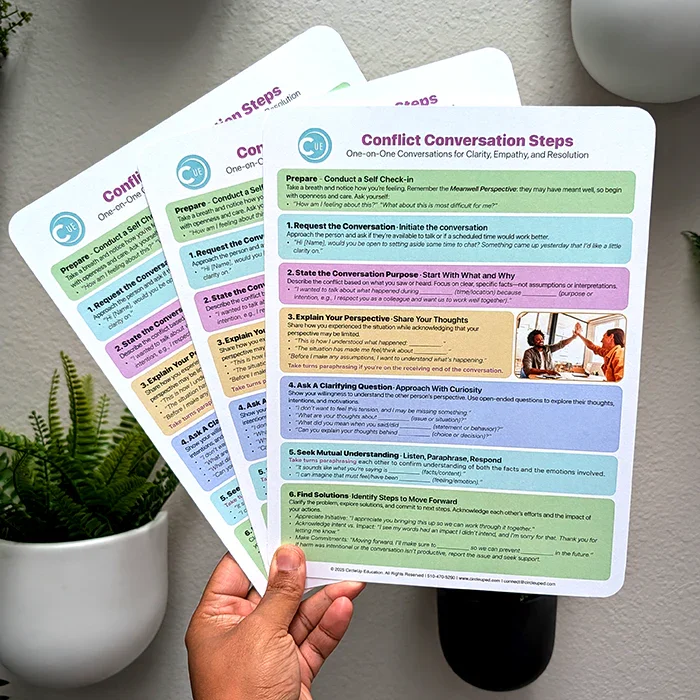
Conflict Conversation Cards
The Feeling Wheel

Bring Restorative Conversations™ To Your Team
Schedule Your FREE 30-minute assessment meeting today!
Let’s Connect Today!
Hours
Monday–Friday
7am–7pm Pacific Standard Time
Phone
(510) 470-5290
Location
Oakland, California | & Your City!