
Team Agreements
A workplace team training to establish agreements to work effectively as a team.
Create a stronger foundation for teamwork by helping people name what they need, agree on how they want to show up, and build accountability together.
Key benefits
✔ Build shared expectations before conflict or confusion grows
✔ Help teams name boundaries, values, and communication needs
✔ Create a practical foundation for meetings, projects, and collaboration
Quick Facts About Team Agreements
-
This course is available in:
Live Online Format - We facilitate the course on Zoom.
Live Onsite Format — We come to your office, school, conference, or community space and facilitate the circle in person.
-
Live Onsite | Live Online — 50 minutes to 3 hours
Each session is customized and tailored to the community, goals, and time available.
-
Staff teams
Supervisors and managers
Leadership teams
Boards and committees
School teams and district staff
Conference groups and retreat participants
Cross-functional teams starting a new project
Any team or community that wants to build a stronger foundation for how they work together
-
Recommended Group Sizes
5–50 participants
Smaller groups allow for deeper reflection and dialogue
Larger groups can be facilitated with customized structures depending on time and goals
What Team Agreements Teaches
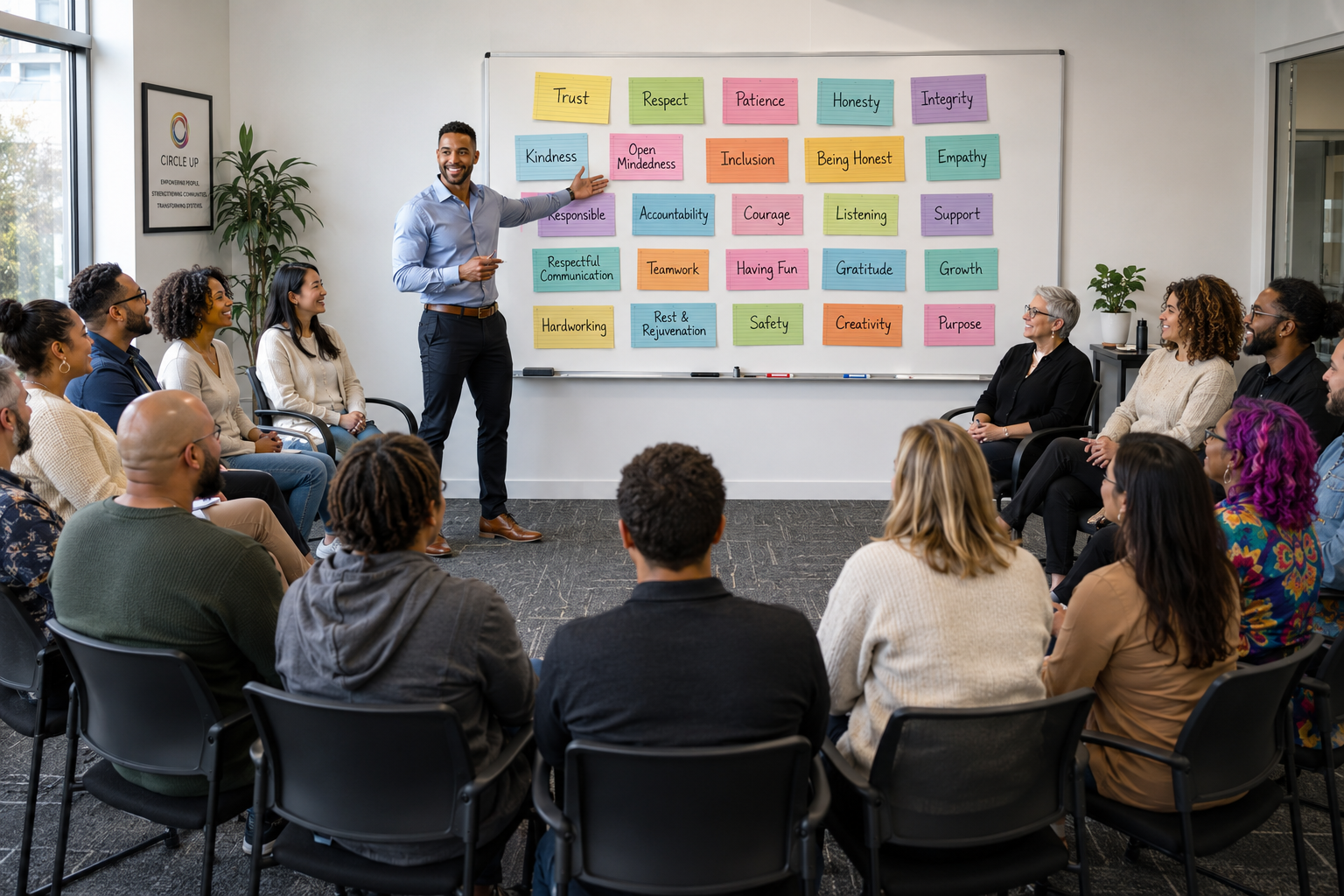
Team Agreements is a restorative practices circle experience that helps teams and communities explore what they value, what they need, and how they want to exist together.
This circle gives participants a structured way to identify the conditions that support trust, respect, accountability, and collaboration. Rather than assuming everyone has the same expectations, the process helps a group slow down and name what matters most around teamwork, meetings, communication, and shared space.
Participants begin with an exploration round, where they reflect on questions connected to values, needs, expectations, and boundaries. From there, the group moves into an agreement round, where participants collectively identify and commit to the agreements they want upheld in order to work well together.
This circle is often the starting point for a team or community because it creates the foundation for everything that follows. Before team building, problem solving, or hard conversations, people first need shared clarity on how they want to engage.
Pillar 1: Values and Needs Exploration
Participants reflect on what helps them feel respected, heard, included, and able to participate fully.
Pillar 2: Shared Agreements and Boundaries
The group identifies the expectations, norms, and boundaries they want to hold together.
Pillar 3: Collective Accountability
Participants move beyond ideas into commitment by agreeing on how the community will uphold the agreements going forward.

Learning Outcomes
Identify the values and needs that support healthy teamwork and collaboration.
Reflect on the conditions that help them participate honestly, respectfully, and effectively.
Name boundaries and expectations that can strengthen meetings, communication, and project work.
Contribute to a shared set of team or community agreements.
Build a stronger foundation for accountability, trust, and future restorative conversations.
Tools Participants Learn
Participants leave with practical tools including:
Team agreements framework
Values and needs reflection prompts
Boundary-setting language
Shared expectations process
Restorative circle participation structure
Community accountability language for upholding agreements

Who is Team Agreements for?
This training is Ideal For
Teams that are just beginning to work together
Groups that need clearer expectations for meetings or communication
Teams preparing for a new project, initiative, retreat, or conference
Communities where boundaries are often unclear or overstepped
Organizations that want to create a healthier culture before tension escalates
Groups seeking a restorative foundation before discussion circles, team building, or conflict dialogue
Available Training Formats
Live Online Training
Facilitated workshop delivered via Zoom.
Live Onsite Training
Facilitated workshop delivered in person at your site.
Each option can be customized for your team.

Testimonials
“This helped our team slow down and actually talk about what we each need in order to work well together. It gave us language for respect, listening, and accountability that we now use in our meetings.”
High School Principal“We realized we had been assuming shared expectations without ever naming them. This circle helped us create agreements that felt honest, practical, and supportive.”
County Housing Director“The conversation was simple, but powerful. It helped our group build trust and set boundaries before starting a major project together.”
Library Director
People Interested In ChatterMatter™ Also Purchased…
Backtalk™
Having difficult conversations with staff & accountability conversations.
Call-In Card™
Learning to call people “In” when implicit bias, or questionable actions occur.
Implicitly Yours™
Master the basics of explicit and implicit bias in the workplace and how to identify work related bias.
Emoji Emotion Cards

The Feeling Wheel

Bring Team Agreements to Your Team
Schedule Your FREE 30-minute assessment meeting today!
Let’s Connect Today!
Hours
Monday–Friday
7am–7pm Pacific Standard Time
Phone
(510) 470-5290
Location
Oakland, California | & Your City!